Why SaaS Dominates the World (and Why This Won't Change Soon)
Article published by Buyini – ERP software in Algeria for Algerian SMEs.
SaaS (Software as a Service) is simply the subscription-based software model you use every day — often without even realizing it.
Gmail, Notion, Slack, Figma, Salesforce, Stripe… guess what? They’re all SaaS.
And if this model is currently devouring the old installed software, it’s no accident.
What is SaaS concretely?
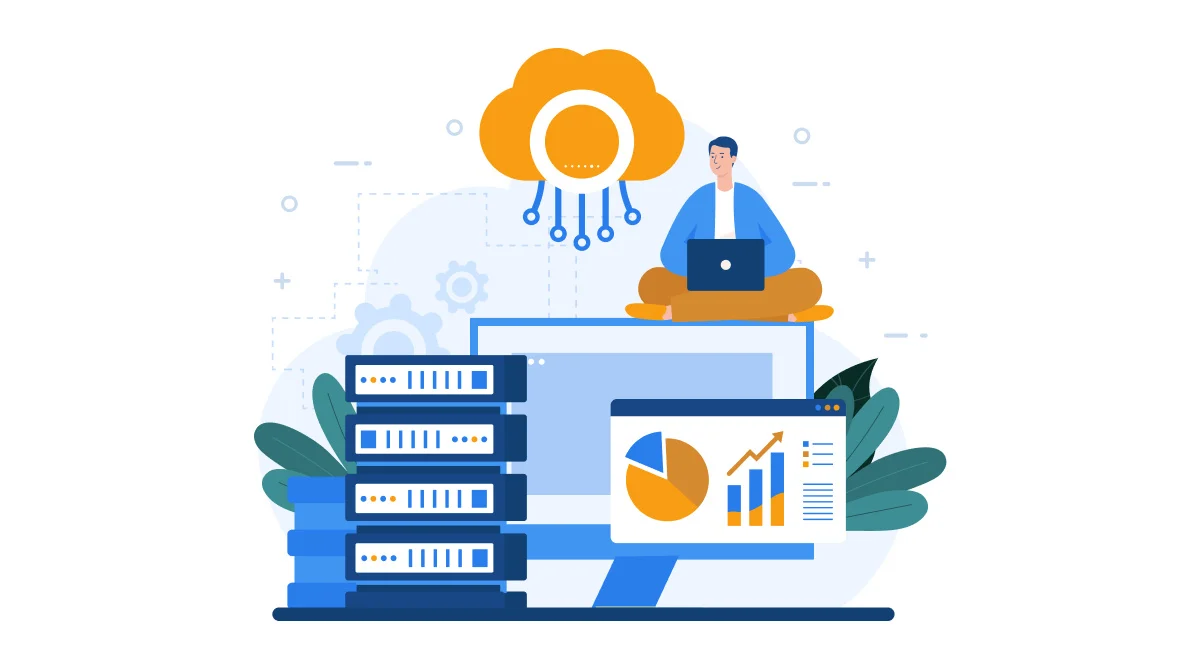
It’s software hosted on remote servers (“the cloud”) that you access directly through a web browser or a phone app.
No complex installations, no manual updates, no local hardware maintenance. You just log in, and start working. That’s it.
Why does everyone love SaaS?
Simply because:
- Accessible from anywhere (computer, tablet, phone… even outside the office with WiFi)
- Easy to deploy and use
- Continuously and automatically updated
- Scalable — grows with your business
- Near-zero buying barriers (you pay a small monthly fee instead of a huge upfront amount)
For companies… it’s a marriage!
Companies love the SaaS model because:
- Very low initial cost (no need to buy software infrastructure or heavy hardware)
- Recurring revenue (subscription model = stable, guaranteed monthly cash flow)
- Continuous product improvement (new features and updates over time without bothering the user)
- Direct, ongoing customer relationship
You keep customer loyalty, improve your product, and increase your monthly recurring revenue (MRR). It’s every founder’s dream.
Are there drawbacks? Of course, nothing is perfect
- Dependence on the provider: if they shut down or suddenly raise prices, you’re in real trouble.
- Data in the cloud: it requires deep trust in their server security.
- Endless subscriptions: in the long run, the subscription may cost you more than a one-time purchase.
But let’s be honest: in most cases, the benefits crush the drawbacks.
What about developers?
Building a SaaS today is one of the best ways to:
- Make money while you sleep (if your product solves a real problem)
- Launch a project solo (Solopreneur) or with a tiny team
- Have full, independent control of your business
The classic stack for the curious: Next.js / React, Node.js or NestJS, PostgreSQL, Stripe, Vercel/Render/Fly.io. And of course… aggressive, very strong marketing.
The future? More and more SaaS
We now see SaaS appearing in very narrow, specific niches (Micro-SaaS):
- SaaS for barbershops and pet care
- SaaS for independent gyms
- SaaS for Etsy sellers
- SaaS for HR consultants
If you have expertise in a field, you can turn any daily problem into digital gold.
Summary
SaaS isn’t a passing wave or a temporary fad — it’s the modern standard for software.
Are you a business owner? You’ll move to this model sooner or later. Are you a developer or entrepreneur? You’d better think about it seriously.
Because while others still try to sell one-time $9 apps, SaaS software collects $100 a month, every month, for years.
Want to launch your SaaS? Start by solving a real problem people suffer from. Then code it, sell it, and scale it. But above all: don’t overstuff features, go straight to the point.